 24Oranges spotted this self retrospective video by Oxenaar...

Game Show Answer
4 hours ago
24Oranges spotted this self retrospective video by Oxenaar...
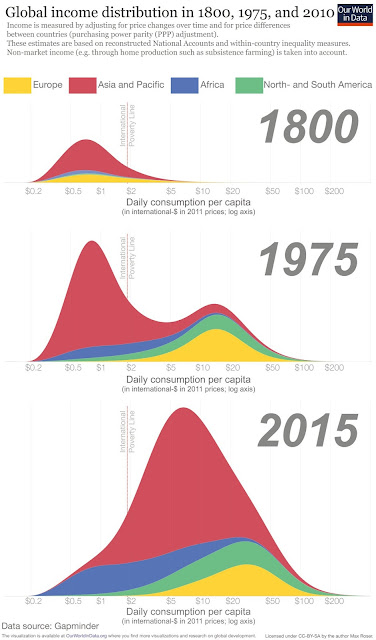
"There are three takeaways from this data. The first conclusion [...] is that the world is getting richer. Hundreds of millions of people have been lifted out of extreme poverty. That’s wonderful news. The second conclusion, as seen by the red section of the chart, is that a modest bit of reform in India and China has paid big dividends (and, given the success of Indian-Americans and Chinese-Americans, I imagine those nations could become much richer with additional market-friendly reform). But I want to focus today on a third conclusion, which is that pro-growth policies are the best way to help the poor, not redistribution driven by a fixation on inequality."
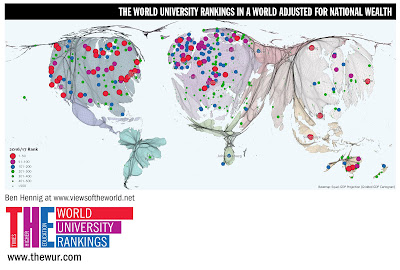
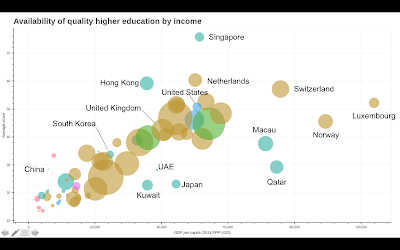 Thanks to a WEForum post for spotting infographics created for Times Higher Education by Ben Hennig, an associate professor at the University of Iceland, which spotlight the relationship between wealth and world-class universities...
 "What are the essential ingredients needed to make a world-class university? [...] The answer always involves a discussion of the importance of institutional autonomy and academic freedom, and a recognition of the crucial fact that without great people, there can be no great university. But one element is undeniably more important than any other: cold, hard cash. [...] You can’t create the appropriate research facilities, or provide the appropriate teaching environment, without money -- but most importantly, you can’t attract and retain the required talent in a highly competitive global recruitment market without the resources to pay attractive salaries."

"When you take a look at the history of the Middlesex Canal, built from 1794 to 1802, you’ll find a surprising similarity between the issues facing technology investors today, with those over 200 years ago. [...] The technology of moving goods at great scale and at low cost started with the Middlesex Canal. Then the railroads took over. Now containerization [...] Like all technology change, those in control of the current technology fight hard to hold on [...] But the march of technology is relentless when new approaches cut costs and increase speed."
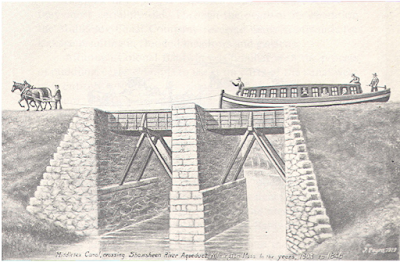 Be especially sure as you read Bill's story to check out his MapJunction tool to visualize the historic pathway overlaid over contemporary photo-map!
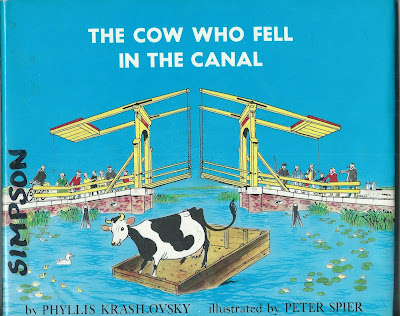 Richard Sandomir in the NYTimes shares the sad news that inspirational illustrator Peter Spier has passed away at 89 from congestive heart failure. My very earliest favorite book -- i.e. when I was a toddler and my parents read to me -- was about Hendrika the Cow Who Fell in the Canal but as a teen I really spent endless hours on Of Dikes and Windmills. Amazing stuff about Dutch history, epic civil engineering, and the power of nature!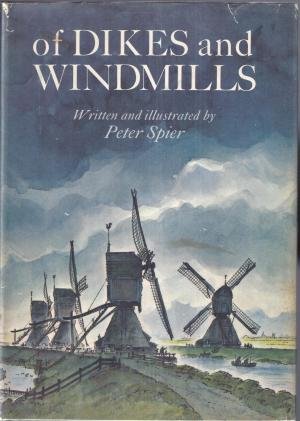

“Wishing all of you the best of good buys”
"The full circle, known as a Voronoi Diagram, represents the entirety of the $74 trillion global economy in nominal terms. Meanwhile, each country’s segment is sized accordingly to their percentage of global GDP output. Continents are also grouped together and sorted by color."
 P.S. The actual graphing was done by HowMuch.net
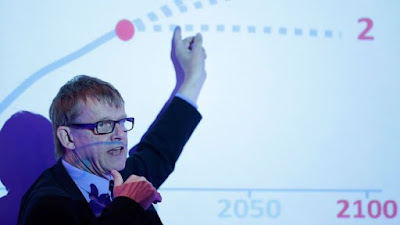 Pancreatic cancer has laid low Hans Rosling, the Gapminder co-founder and my favorite public health statistician and data edutainer extraordinaire. He has many remarkable TED talks and other videos online, but I personally favor his appearance at TEDIndia speaking on Asia's Rise where he compares global growth over 200 years and predicts exactly when India and China converge with the rich!
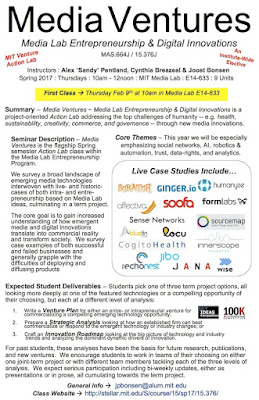

 On Tuesday night, 24 January 2017, Joe Hadzima and I kick off the latest incarnation -- the 28th year (!!) -- of our MIT Nuts & Bolts of New Ventures course over the MIT Independent Activities Period (IAP 2017). Joe starts with the essence of business planning as a process of iterative imagination and special guest speaker Bob Jones shares how to present venture essentials. My primary topic is Team & Organizational issues, our special guest speakers (mostly MIT alums, all entrepreneurs) cover the essentials everyone ought to know about new venturing, including how to identify customers, pitch a concept, raise money, model financials, deal with legalities, negotiate with people, and holistically integrate this all together.
"A new animation from the Cornell Lab of Ornithology tracks 118 species along their journeys across the Americas."

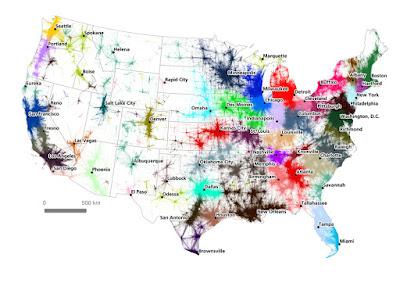
"Previously megaregions have been typically identified by an interpretative method that links large metropolitan regions through similar environmental and infrastructure systems, economic links and cultural similarities. These approaches are often based on a ‘best guess’ kind of approach, and do not rely on the analysis of large datasets. Now Dr Alasdair Rae and his co-author Dr Garrett Nelson have developed an empirical approach to identify megaregions using a dataset of more than 4 million ‘commuter flows’ involving the travel to work patterns of 130 million Americans."


"The geography of the 2016 election is spiky."


