Thanks to a WEForumpost for spotting infographics created for Times Higher Education by Ben Hennig, an associate professor at the University of Iceland, which spotlight the relationship between wealth and world-class universities...
"What are the essential ingredients needed to make a world-class university? [...] The answer always involves a discussion of the importance of institutional autonomy and academic freedom, and a recognition of the crucial fact that without great people, there can be no great university. But one element is undeniably more important than any other: cold, hard cash. [...] You can’t create the appropriate research facilities, or provide the appropriate teaching environment, without money -- but most importantly, you can’t attract and retain the required talent in a highly competitive global recruitment market without the resources to pay attractive salaries."
Check out Root Capital, a financing and connections-making social venture which helps small and growing rural agri-businesses thrive long-term, socially, economically, and sustainably. See especially their Timeline and here's founder Willy Foote sharing how it all started... And a summary of their approach... And a Skoll World Forum Uncommon Heroes mini-docu on Root...
“Jugaad” is a word that often describes a solution or a product that uses unconventional and generally low-cost methods. Jaideep Prabhu and his co-authors took an idiomatic Hindi term, Jugaad, and used it to explain a growing phenomenon in emerging economies [...] Jugaad Innovation isn’t a concept that is only limited to Asian and African counties; is also spreading in the West particularly through young entrepreneurs. [...] Jugaad Innovation is interesting to study because it provides powerful solutions for unmet needs in education, healthcare etc."
"Kenya's president has launched a $14.5bn (£9.1bn) project to build a new city intended to be an IT business hub and dubbed "Africa's Silicon Savannah". It will take 20 years to build Konza Technology City about 60km (37 miles) from the capital, Nairobi. [...] Konza is part of the government's ambitious Vision 2030 initiative to improve much-neglected infrastructure over the next 18 years. [...] The 5,000-acre (2,011-hectare) site was a ranch to the south-east of Nairobi on the way to the port city of Mombasa. [...] The city wants to attract business process outsourcing, software development, data centres, disaster recovery centres, call centres and light assembly manufacturing industries. A university campus focused on research and technology as well as hotels, residential areas, schools and hospitals will also be built. The government has appointed the Konza Technopolis Development Authority to oversee the building of the IT hub, which will be built in four phases -- starting with the technology centres first."
"The groundbreaking of the Konza Technopolis Park on Wednesday is set to boost the profile of Kenya as a regional business hub with more than 250 foreign and local firms already lined up to invest in the $10 billion (Sh840 billion) project. [...] Among the 18 firms that want to invest immediately are the leading mobile phone firm Safaricom, which intends to put up a data centre, Samsung Electronics which he said will put up an assembly plant, and Huawei of China. The multi-billion-shilling ICT Park is hinged on a private-public partnership financing model where the government has offered land and is building infrastructure such as electricity, water rail and roads. The private sector on the other hand is expected to put up investments in various industries such as in business process outsourcing (BPO) ventures, a science park, shopping malls, hotels, international schools and health facilities."
"...engaged in the development and commercialization of technology for marine transportation of compressed natural gas (CNG) [They do this through a] innovative marine CNG technology -- the Coselle. The Coselle is a large-volume, high-pressure gas storage module. Coselle is a contraction of the words “coiled pipe in a carousel”. [The result is] efficient transportation of CNG by ship with a minimal onshore footprint [and] a highly economic solution for realizing the potential of many unexploited or underexploited natural gas reserves."
This is a big deal in that it enables shuttling gas from smaller supply points and/or in places where capital infrastructure is too challenging...
"While the energy density of CNG is about half that of LNG and will therefore require more shipping capacity, CNG loading and discharge facilities are much simpler, much less expensive and have a significantly smaller footprint. The result is that CNG provides a significantly more economic solution, which is easier and quicker to permit and implement, for the transportation of smaller volumes of gas over shorter distances."
This is a brilliant scheme which will be tremendously valuable, especially in emerging markets with fast growing coastal activities and where economies of flexibility are key. This finale video summarizes the basic Sea NG shuttle transportation service for CNG... P.S. There are other approaches to shipping CNG.
The McKinsey Global Institute just released their new report Urban world: Cities and the rise of the consuming class by co-authors Richard Dobbs, Jaana Remes, James Manyika, Charles Roxburgh, Sven Smit and Fabian Schaer...
"Through a combination of consumption and investment in physical capital, growing cities could inject up to $30 trillion a year into the world economy by 2025. Understanding
cities and their shifting demographics is critical to reaching urban consumers and to preparing for the challenges that will arise [...] The 600 cities making the largest contribution to a higher global GDP -- the City 600 -- will generate nearly 65 percent of world economic growth by 2025. However, the most dramatic story within the City 600 involves just over 440 cities in emerging economies; by 2025, the Emerging 440 will account for close to half of overall growth. One billion people will enter the global consuming class by 2025. [...] To capture the opportunities that arise from urbanization, businesses will need extensive market intelligence. [...] Companies that understand and respond to shifting urban marketplaces are likely to experience tremendous benefits. Yet a new McKinsey survey finds that less than 20 percent of executives are making location decisions at the city level."
"The spread of a new sort of business in the emerging world will cause increasing problems [...] The era of free-market triumphalism has come to a juddering halt, and the crisis that destroyed Lehman Brothers in 2008 is now engulfing much of the rich world. [...] The crisis of liberal capitalism has been rendered more serious by the rise of a potent alternative: state capitalism, which tries to meld the powers of the state with the powers of capitalism. It depends on government to pick winners and promote economic growth. But it also uses capitalist tools such as listing state-owned companies on the stockmarket and embracing globalisation. [...] State capitalism can claim the world’s most successful big economy for its camp. [...] State capitalism can also claim some of the world’s most powerful companies. [...] State capitalism is on the march, overflowing with cash and emboldened by the crisis in the West. [...] This special report will focus on the new state capitalism of the emerging world rather than the old state capitalism in Europe, because it reflects the future rather than the past. The report will look mainly at China, Russia and Brazil."
This is essential -- and quite troublesome -- reading.
"The world's slums are overcrowded, unhealthy -- and increasingly seen as resourceful communities that can offer lessons to modern cities. [...] No one denies that slums -- also known as shantytowns, squatter cities, and informal settlements -- have serious problems. They are as a rule overcrowded, unhealthy, and emblems of profound inequality. But among architects, planners, and other thinkers, there is a growing realization that they also possess unique strengths, and may even hold lessons in successful urban development. [...] slums have assets along with their obvious shortcomings. Their humming economic activity and proximity to city centers represent big advantages over the subsistence farming that many slum dwellers have fled. Numerous observers have noted the enterprising spirit of these places, evident not only in their countless tiny businesses, but also in the constant upgrading and expansion of homes. Longstanding slum communities tend to be much more tightknit than many prosperous parts of the developed world, where neighbors hardly know one another. Indeed, slums embody many of the principles frequently invoked by urban planners: They are walkable, high-density, and mixed-use, meaning that housing and commerce mingle. [...] And there are thinkers who take the idea a step further, arguing that slums should prompt the rest of us to reconsider our own cities. While the idea of emulating slums may seem absurd, a number of planners and environmentalists say that we would do well to incorporate their promising elements."
Very compelling concept indeed. And with fast growing cities in emerging regions, such slum learning could lead to urgently needed urban innovations.
Fantastic to have final presentations this morning in our emerging market innovations class, MIT Development Ventures! 2011 is the 11th year Professor Alex (Sandy) Pentland and I have run this entrepreneurial action lab! Nearly three- dozen new venture concepts this year, including both for- and non-profit, across multiple sectors including health, energy, education, commerce, and civic. In reverse order of presentation, we have (plus start geo-locations)...
"My only regret on the first BRICs analysis of 2001 is that we weren't bolder. Between 2001 and 2010, the BRIC economies' GDP rose much more sharply than I had thought possible even in the most optimistic scenario. [...] In all my analysis of world economies, amid all the information and hype, I have stayed focused on the benefits of an expanding, more productive workforce. [...] I had not fully appreciated the simple but critical importance of demographics and productivity. Simply applying the most credible estimates of long-term demographic trends, especially for the working population, is the intellectual cornerstone of the argument for the BRICs' potential. Between them, the four BRIC countries are home to close on 3 billion people, not far off half the world's population. [...] Given the BRICs' success, it should be no surprise that many other countries are now vying to be dubbed the next BRIC. [...] We came up with a group that we called the 'Next Eleven', or N-11 for short. They are Bangladesh, Egypt, Indonesia, Iran, (South) Korea, Mexico, Nigeria, Pakistan, the Philippines, Turkey and Vietnam. Although we thought no N-11 country was likely to grow to the size of any of the BRICs, we predicted that Mexico and Korea had the capacity to become almost as important as the BRICs. [...] the term emerging markets could no longer be applied to the BRICs and four of the N-11: Indonesia, Korea, Mexico and Turkey. These are now countries with largely sound government debt and deficit positions, robust trading networks and huge numbers of people all moving steadily up the economic ladder. For investors to understand the scale of the opportunity here, and for policymakers to grasp what is changing in the world, they must see these countries apart from the traditional emerging markets. I decided that a more accurate term would be Growth Markets."
Excellent to see MIT's AITI -- Accelerating Information Technology Innovation -- continuing to ignite mobile ventures in emerging markets, in Africa and beyond!
"AITI partners with universities and organizes advanced courses taught by MIT student/instructors. Our courses focus on mobile and Internet technologies, and are structured so that our students are awakened to the commercial possibilities of the technologies. Components of the course include detailed technical curriculum, funded business competitions, guest lectures, and networking events. [...] Mobile phones are tools that can promote development by inspiring new business opportunities and increasing efficiencies. Local entrepreneurs' innovative use of mobile technology is at the heart of this revolution."
China has three so-called Economic Rims or supercity megaregions -- Bohai, Yangtze, and Pearl -- each agglomerations around a central megacity -- Beijing, Shanghai, and Guangzhou -- embracing upwards of a dozen smaller cities, all amidst geophysical supernodes -- Bohai Sea, Yangtze River Delta, and the Pearl River Delta. Each megaregion has populations between 50-100M and has colossal infrastructure and planning issues. This is epic and fascinating! P.S. It strikes me that Taiwan with it's economic miracle history should really be thought of as a superisland and thus fourth Chinese megaregion too!
In Reuters interview, Brazilian Eike Batista on Africa, Indonesia, India, China, Asia generally on urbanization, the developing middle class, and the "debottlenecking" of economic growth back home...
The Soviet hardliner attempted coup twenty years ago, 19-21 August 1991, triggered the dissolution of the USSR by Christmas that year. An amazing period in history but still shrouded in mystery as the FT's Moscow chief Charles Clover writes in Last days of the USSR...
"...the failure of the GKChP [coup committee] has long been characterised as a triumph for democracy over the forces of reaction, people over politburo. It was a pivotal episode in the extraordinary year of 1991, which academics and statesmen now speak of in the same breath as 1789 and 1917: a moment of inflection between the paradigms of totalitarian rule and liberal democracy. In this story, the Soviet coup provides a microcosm: the two systems collided, and one emerged victorious. As Yeltsin said afterwards: “One century ended, the century of fear, and another began.” The image of the ordeal remains Yeltsin standing on a tank, an elected leader facing down the gun."
"The only problem with this reading of the putsch is that it doesn’t sit well with the facts. The more one delves into those three days, the more shadowy and shifting they become. The vital, decisive moments had very little to do with democracy, or the march of history; what counted in the crisis was the superior ability to mystify, mislead and manipulate. This was a clash of conspiracies, and the best conspiracy won."
Take a look at a contemporary newscast to get a sense of just how disconcerting these events in Moscow were. People really thought this was prelude to a bloody civil war... But with tank commanders shifting sides and the word spreading of Yeltsin and the defenders of the parliament, the coup collapsed, and by Friday, 23 August 1991, Russians had pulled down the statue of KGB founder Felix Dzerzhinsky right in front of the KGB headquarters in Moscow! And by Christmas, Gorbachev resigned live on global satellite TV! Amazing! And, of course, there's far more to the backstory as shared by Der Spiegel's Christian Neef in a joint interview with Gorbachev and his piece The Gorbachev Files: Secret Papers Reveal Truth Behind Soviet Collapse. In any case, the saddest thing about all this is that 70 years of pervasive and pernicious Communist dictatorship has been difficult to undo and the subsequent two decades has been extraordinarily disruptive for the common citizenry. Perhaps in another decade or so Russians will finally achieve their rightful measure of prosperity. The Guardianspotlights what happened with the former elements of the Soviet empire...
"Beyond macroeconomic factors [...] technology is driving profound changes to economies and societies across the continent. The hundreds of millions of mobile handsets and billions of airtime minutes only go some way to describe the scope of entrepreneurship that underpins Africa's technological revolution. From mobile payments to telemedicine and advertising, there is a common pulse of innovation, driven by an irrepressible combination of aspiration and necessity. This is the new Africa."
Companies and innovators mentioned include M-PESA, Verviant, PesaPal, Safaricom, Google, Wananchi, Zuku, InMobi, Encipher, mPedigree, Kalahari, Dealfish, Mocality, and more.
"Since 1995, seventeen African countries have defied expectations and launched a remarkable, if little-noticed, turnaround. These countries are putting behind them the conflict, stagnation, and dictatorships of the past and replacing them with steady economic growth, deepening democracy, improved governance, and decreased poverty. Five fundamental changes are at work:
more democratic and accountable governments;
more sensible economic policies;
the end of the debt crisis and changing relationships with donors;
the spread of new technologies; and
the emergence of a new generation of policymakers, activists, and business leaders.
[This study] takes a fresh approach by recognizing the important differences between Africa’s emerging countries, the oil-exporters (where progress has been uneven and volatile), and the others (where there has been little progress) instead of treating sub-Saharan Africa as a monolithic entity. This important book describes the revitalization underway in the emerging countries and why it is likely to continue."
Check out their Average Growth Rates per Capita 1996–2008 map...
MIT $100K Entrepreneurship Competition, Enterprise Forum Global, Enterprise Forum of Cambridge, Muddy Charles Pub, African Business Club, Sloan Entrepreneurs for International Development, Global Startup Workshop, Sustainability@MIT, TechLink, Making Progress, HighTechFever.tv, MIT Innovation Tours
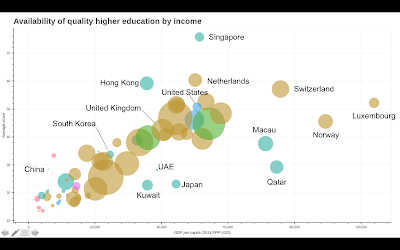 Thanks to a WEForum post for spotting infographics created for Times Higher Education by Ben Hennig, an associate professor at the University of Iceland, which spotlight the relationship between wealth and world-class universities...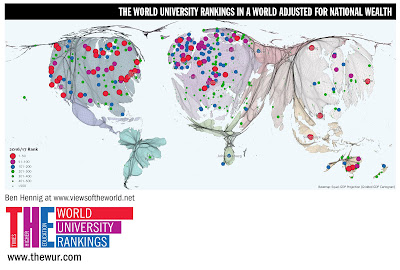


.svg.png)


