Showing posts with label infrastructure. Show all posts
Showing posts with label infrastructure. Show all posts
08 January 2019
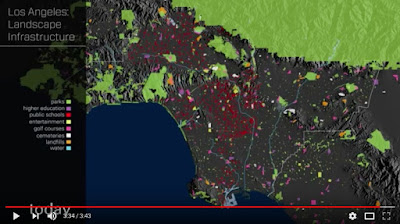
LA Timelapse Map ~ Infra, Nets, Pop, Econ, etc!
The Getty Research Institute shares timelapse maps of Los Angeles Instrastructure, Networks, Settlements, Population, Economy, and Conflicts!

22 December 2018
Golden Gate ~ Building This Epic Infrastructure!
Arguably the most amazing piece of civil engineering infrastructure -- or certainly a Top 10 together with Roman aqueducts, the Suez & Panama Canals, various Chunnels, transcontinental railroads, the Hoover Dam, and more -- is surely building the Golden Gate Bridge as documented here... And look at those dimensions! Huge! 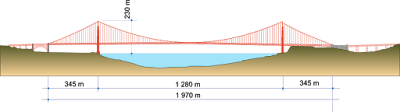
01 August 2017
Power Barges ~ Flexible Floating Infrastructure
Thanks to gCaptain for spotting an improved Power Barge system...

"A new modular medium speed engine power barge design [...] This radiator-cooled modular power barge design permits the same hull to be utilized with a range of power outputs from 80 MW to 180 MW. [...] The new design is presently being modified for dual fuel and natural gas operations to suit combined operations with LNG […] and combined cycle systems for specific market opportunities."Power barges are the fastest way to ramp up electricity (and cogen + water desal) infrastructure in coastal or navigable river areas. By floating in and being modular, they can be incrementally added to (with more barges) or floated out and moved to new or better location (and/or refurbished). See also my previous posts on this topic!
22 May 2017
Canals ~ Early Disruptive & -ted Infrastructure!
Bill Warner spotlights how Before the Internet, There Was the Middlesex Canal...
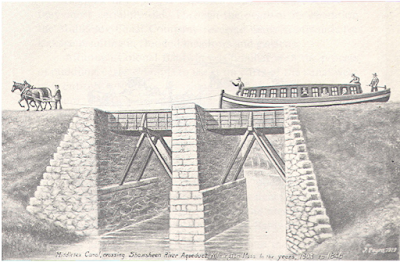 Be especially sure as you read Bill's story to check out his MapJunction tool to visualize the historic pathway overlaid over contemporary photo-map!
"When you take a look at the history of the Middlesex Canal, built from 1794 to 1802, you’ll find a surprising similarity between the issues facing technology investors today, with those over 200 years ago. [...] The technology of moving goods at great scale and at low cost started with the Middlesex Canal. Then the railroads took over. Now containerization [...] Like all technology change, those in control of the current technology fight hard to hold on [...] But the march of technology is relentless when new approaches cut costs and increase speed."
Be especially sure as you read Bill's story to check out his MapJunction tool to visualize the historic pathway overlaid over contemporary photo-map!
28 March 2015
Sambany ~ Health Empowered via Mercy Ships!
One of the latest beneficiaries of the Mercy Ships floating hospital organization (and one of my favorite examples of flexible & fast floating solutions) is Sambany, a 55yo burdened by an 8kg facial tumor. Not only is his treatment story epic, but so too is the essential life-affirming mission of MS... See more on the MS channel.
28 January 2015
Winter Cycling ~ Wagenbuur on NL Seasons...
Mark Wagenbuur at BicycleDutch writes about how cyclists in the Netherlands deal with snowy, wet winter weather... He also spotlights the general state of infrastructure -- especially maintenance and safety conditions -- and compares summer vs winter cycling on the same pathway...
16 November 2014
Learning From Sandy ~ Can NYC Really Prepare?
Superstorm Sandy -- two years ago, this past two weeks or so -- exceeded expectations and caught much of NYC and our American eastern seaboard surroundings short. Surge flooding, power loss, transit disruption, property damage, and more. Watch the docus to get a sense of scale and ferocity... The NYC Comptroller has upped estimates of property at-risk and the NYC leadership are on the ball pushing for change. DotEarthling Andrew Revkin spotlights NYC's softer relationship with the sea and especially NYTimes colleague Alan Feuer's Building for the Next Big Storm ~ After Hurricane Sandy, New York Rebuilds for the Future...
 Especially watch this series of speakers highlighting plans for Recovery and Resiliency at NYC's Hospitals (NYU Langone, Bellevue, etc)... P.S. Here's some historical nuggets, including my commentary on 27 Oct 2012 Superstorm Sandy ~ Tracking Emergent Weather, 28 Oct NYC Evac Map ~ Warning Zones for Sandy, looking at big picture on 29 Oct Imaging Sandy ~ NASA/NOAA Timelapse, the disaster retrospective Into the Storm ~ Final Days of Tallship Bounty, NYC Mayor Bloomberg announcing PlaNYC, early thoughts on resiliency, the power of drills in the hospital evacuations, and specific inventions, like the Tunnel Plug!
"In the next four decades, scholars say, sea levels are expected to rise by as much as 30 inches, and if the worst projections come to pass, about 800,000 city residents could find themselves living with the threat of being swamped. According to an insurance report commissioned by the city, if New York suffers another storm like Sandy in the early 2050s, when ocean levels and the population are likely to be higher, it could cause $90 billion in damage -- almost five times the cost of the initial storm."Some radical new thinking is needed about coastal flood resilience, defence-in-depth, room for the water, more savvy infrastructure, and more...
Especially watch this series of speakers highlighting plans for Recovery and Resiliency at NYC's Hospitals (NYU Langone, Bellevue, etc)... P.S. Here's some historical nuggets, including my commentary on 27 Oct 2012 Superstorm Sandy ~ Tracking Emergent Weather, 28 Oct NYC Evac Map ~ Warning Zones for Sandy, looking at big picture on 29 Oct Imaging Sandy ~ NASA/NOAA Timelapse, the disaster retrospective Into the Storm ~ Final Days of Tallship Bounty, NYC Mayor Bloomberg announcing PlaNYC, early thoughts on resiliency, the power of drills in the hospital evacuations, and specific inventions, like the Tunnel Plug!
03 November 2014
Protected Intersections ~ Key for Urban Bicycling
Pascal van den Noort at VeloMondial spots Nick Falbo's Protected Intersections video... Nick does a good job synthesizing lessons-learned from Dutch designs including those noted by two of my favorite cycle blogs, Mark Wagenbuur's BicycleDutch and David Hembrow's View From the Cycle Path.
30 August 2014
More NL Junctions ~ Showing Before + After...
Mark Wagenbuur at BicycleDutch does a very nice before + after view of a busy intersection in Utrecht which has just been reconstructed and modernized. This is arguably the latest in Dutch cycling infrastructure and this video builds on his earlier illustrations of Dutch Junction and Safe Intersection design...
"There is a whole range of solutions for safer intersections, but for an urban area like this one -- with relatively narrow streets and a lot of traffic -- this design -- with protected cycleways all around the intersection -- is really best."
10 July 2014
Art of Stevedore ~ Hallajian's Logistics Timelapse!
TheKidShouldSeeThis spots Alex Hallajian's lovely timelapse The Art of Stevedore...
"24/7 operations at the Port of Long Beach, the second-busiest container port in the United States. The concept seems simple: pack consumer goods into containers, float them across the ocean, load them onto trucks and trains, and deliver across the country. The process hasn't changed in hundreds of years except today we do it with stunning efficiency while maintaining safety and environmental cleanliness."
24 May 2014
ECO Cycle ~ Culture Above, Function Below!
Gotthard Base Tunnel ~ 57km Under Swiss Alps!
Some more construction porn, again thanks to pointer from MIT colleague Jonas, this time the Gotthard Base Tunnel (GBT), an epic railway endeavor burrowing under 57km of Swiss Alps to connect north and south in most efficient manner!
"Its main purpose is to increase total transport capacity across the Alps, especially for freight, notably between Germany and Italy, and more particularly to shift freight volumes from road to rail to reduce environmental damage caused by ever-increasing numbers of heavy lorries."
09 May 2014
Laying Pipe ~ Haverkamp on Allseas Audacia!
22 April 2014
Rush Hour Tips ~ Dutch Train Platform Display!
Dutch trainco's demonstrate cool Rush Hour Tips display...
"Where will the train stop? Where can I find an empty seat? Where can I board with my bike? NS and ProRail wanted to improve the transfer process at station platforms: more comfortable, faster and safer. The result of an extensive research and ideation process was a 180 meter long LED strip suspended above the platform showing travellers everything they need to prepare for the next incoming train. Most importantly: using red, orange and green color bands it indicates the occupancy of the different parts of the train. A 3 month pilot at Den Bosch train station proved to be very successful: customers gave NS a significantly higher valuation at the end of the trial period than before. Plans for a nation-wide rollout of the system are at an advanced stage."
20 April 2014
Citi Bike Rides ~ 48hrs, 75Krides, NYC Cycles!
Kottke spots Jeff Ferzoco and team's visualization of 48 hours of Citi Bike Rides in mid-September...
27 March 2014
CycloCable ~ Reengineered Bike Escalator!
Steph at WebUrbanist spots that Norway's Trampe has been reengineered and rebranded as the CycloCable...


"Trampe is the world's first bicycle lift intended for urban areas. The prototype was built in 1993. During its 15 years of operation, Trampe pushed more than 200,000 cyclists up the 130m long hill Brubakken in Trondheim. Already from the beginning, it became one of the most popular tourist attractions."The creation and venture escalation story is compelling...
"The inventor of the Bicycle Lift [...] Jarle Wanvik, is a true bicycle enthusiast. He always finds an excuse for parking his car and using his bicycle instead. [...] In 1992, Wanvik got luminous visions about a bicycle lift that could carry cyclists uphill. Inspired by the ski lift technology, he visualized a lift design by which the cyclists could be pushed uphill without having to descend the bicycle. [...] Wanvik joined forces with the experienced mechanical engineer Stein Løvold and the electrical engineer Magnar Wahl. The local ski lift manufacturer, Protek AS, was picked to manufacture and assemble the world’s first bicycle lift. More than 2.000 people enjoyed the opening ceremony of Trampe on August 18 1993. 15 years and 220.000 trips later it was time to renew the lift. In 2010, the POMA GROUP contacted Design Management AS. After having tested Trampe they asked for a worldwide license. The license agreement was signed on the July 22 2011. Trampe had been authorized by DNV (Det Norske Veritas) in 1994. However, in spite of no accidents during 15 years of operation, International Cableway authorities claimed a more secure design for the next generation of lifts. The answer was CycloCable, a new bicycle lift developed by SKIRAIL (a company member of POMA GROUP), and Design Management AS. CycloCable is based upon the same patent as Trampe but with new, retractable foot plates. The CycloCable in Trondheim is the very first installation of its kind, so Trondheim keep on being the true pioneer of bicycle lifts."
25 March 2014
Beneath Cities ~ Decaying Infrastructure & Death
In NYTimes, Patrick McGeehan, Russ Buettner, and David Chen share scandal: Beneath Cities, a Decaying Tangle of Gas Pipes...

"It is a danger hidden beneath the streets of New York City, unseen and rarely noticed: 6,302 miles of pipes transporting natural gas. [...] The perilous state of New York City’s underground network, one of the oldest in the country [is] a glaring example of America’s crumbling infrastructure. [...] Communities across the country have been struggling to replace thousands of miles of these old, metal pipes with pipes made of plastic or specially coated steel that are less prone to leakage. Few, however, face as daunting a challenge as New York City. To replace all of the old mains in its network right now would cost as much as $10 billion, Con Edison estimates. Much of that expense would fall on the residents and businesses that use the gas for heating and cooking. [...] “Some of this aging infrastructure has reached the end of its useful life” [...] “It’s a major ordeal in a city like New York to just start digging things up.”Yikes, surely there's a better way to design, build, and maintain cities?! Here's the mess below as visualized by Larry Buchanan's infographic and Robert Stolarik's photos...
20 March 2014
Best Cycling City ~ Wagenbuur on Top Nominees
BicycleDutchman Mark Wagenbuur created these video portraits reviewing the pros and cons of five top nominee candidates for Best Cycling City in the Netherlands 2014. First, Zwolle...
Second, Velsen...
Third, Enschede...
Fourth, Eindhoven...
Finally, Almere... P.S. Check out Mark's Recap including portraits by the Cyclists’ Union which make the cities look their best!
15 March 2014
WiTricity ~ Wireless Power Transfer on CNN
CNN's Ponsford and Glass spot Wireless electricity? It's here...
"In the house of the future, wire-free energy transfer could be as easy as wireless internet. If all goes to WiTricity's plans, smartphones will charge in your pocket as you wander around, televisions will flicker with no wires attached, and electric cars will refuel while sitting on the driveway. WiTricity have already demonstrated their ability to power laptops, cell-phones, and TVs by attaching resonator coils to batteries -- and an electric car refueller is reportedly in the works."
23 February 2014
Safe Intersections ~ NL Junction Design Learnings
Mark Wagenbuur at BicycleDutch builds upon earlier posts to delve into Junction design in the Netherlands this time responding to urgings and interpretations from van Veen, Hembrow, Falbo, and Furth (and serious misunderstandings from Washington, DC and Christchurch, NZ). Bottom-line...
"There is an array of measures from which Dutch road designers can choose what is best for a particular situation. But in busy and older down town areas in larger cities there is often no space for the more elaborate measures with detours and tunnels or overpasses. And although even there we see an increasing number of roundabouts, this type of junction design -- a crossroads with cycle paths around it, most often signalised -- will remain the safest solution for a lot of places in the Netherlands. Since many cities in the world have such signalised junctions, this solution to make cycling safer might work there too."Plus, here's Falbo's interpretation for US Protected Intersections...
Subscribe to:
Posts (Atom)


.svg.png)


