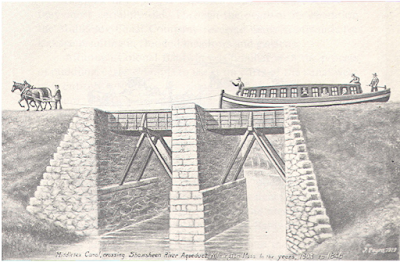
"When you take a look at the history of the Middlesex Canal, built from 1794 to 1802, you’ll find a surprising similarity between the issues facing technology investors today, with those over 200 years ago. [...] The technology of moving goods at great scale and at low cost started with the Middlesex Canal. Then the railroads took over. Now containerization [...] Like all technology change, those in control of the current technology fight hard to hold on [...] But the march of technology is relentless when new approaches cut costs and increase speed."
In WGBH News Edgar Herwick spotlights How Edwin Land Built Polaroid Into The Ultimate Mass. Consumer Technology Powerhouse, and he notes...
"There’s this fascinating, kind of haunting video from 1970 that you can watch on YouTube, in which Edwin Land -- chemist, inventor, inspiration to Steve Jobs, and co-founder of Polaroid Corp. -- walks through a half-built factory in Norwood where he planned to change the world."
The Guardianexcerpts Judith Rodin's The Resilience Dividend: Managing Disruption, Avoiding Disaster and Growing Stronger in an Unpredictable World...
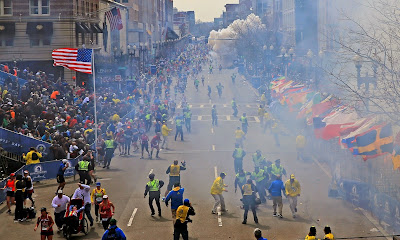
"The city of Boston proved it had developed an exceptional state of readiness for a citywide disruption when, on the afternoon of 15 April, 2013 -- Marathon Monday, as it’s known there -- two improvised explosive devices detonated on Boylston Street. Although the attack was unanticipated and unpredictable, Boston had been getting ready for just such an event for more than a decade -- through network building and streamlining communications to improve awareness, undertaking situational drills and exercises to fine-tune integration, and finding and adapting best practices from colleagues worldwide to bring in a broad range of ideas and solutions. [...] Being prepared is not a matter of luck [...] It was a matter of carefully and methodically building the characteristics of resilience that enable an effective response to crisis. Resilience is not only about responding to shock and stress. It is also about learning and continuing to adapt and grow because of the experience. This process of “revitalisation” can further increase your readiness for subsequent disruptions, find opportunities that emerge from what you have learned, affect positive changes, and build even greater resilience (“the resilience dividend”)."
"Since service began on Memorial Day weekend, the [CapeFlyer] train has transported nearly 9,000 passengers -- almost 900 of them last weekend -- between Boston and Hyannis. The increasingly popular venture has collected enough fares to cover the approximately $165,000 annual cost of operating the train, and the service may be extended until Columbus Day. [...] Train service between Boston and the Cape has been attempted several times over the years, but this iteration has a better chance of success [...] Bike racks in the first car of the train have hit capacity more than once, forcing the train crew to find other places to stow them. “It has opened up a crowd of people that wouldn’t normally come here because they don’t want to drive,” Wurfbain said. “Without taking that trip with the car, it’s so much more pleasant.” [...] Restored rail lines make the ride faster and smoother, he said, while high gas prices and the desire to avoid traffic jams like the 25-mile backup over the 4th of July weekend are prompting more people to leave their cars at home."
"Kendall has become what economists call a cluster, a concentration of interconnected companies that both compete and collaborate. [...] net job growth comes from startup companies, especially the kind that explode from a few employees to several thousand. In technology, those winners have a way of producing more winners. The process reaches critical mass in the web of intertwined companies, resources, advantages, ideas, talent, opportunity, and serendipity that defines a technology cluster. It’s clear that what’s essential is proximity to human talent and new ideas. [...] The big questions in this month’s MIT Technology Review Business Report are why technology clusters arise and what the ingredients are to create one."
The Globe's Scott Kirsner suggests a great idea, an Innovation Trail as alternative to the historical Freedom Trail...
"I’m proposing a different kind of walk though Boston and Cambridge: an Innovation Trail that focuses on the past, present, and future of innovation here. We’ll always have Paul Revere’s place and Old Ironsides, but what about the incubator where Thomas Edison and Alexander Graham Bell tinkered or the world’s only “Walk of Fame” for entrepreneurs? The Innovation Trail picks up just a few years after the Freedom Trail leaves off: The newest spot on the old trail is the Bunker Hill Monument, built in 1842. The oldest stop on this new trail is the Ether Dome at Massachusetts General Hospital, where surgical anesthesia was first demonstrated successfully in 1846."
While Scott offers more detail in his blogpost, in my opinion he overlooks a few especially key places, including...
Arthur D Little's Research Palace, the first of Boston's innovation consultancies (Bain, BCG, Monitor came later),
Main Street as the original telecom alley where Bell made the first long-distance phone call to Watson who was sitting in an historic landmark building first home to Davenport's railroad car manufactory, later home of Land's instant photo firm, Polaroid, and today shared biotech space, LabCentral,
"The bombs at the Boston Marathon were designed to maim and kill, and they did. Three people died within the first moments of the blast. More than a hundred and seventy people were injured. [...] Yet it now appears that every one of the wounded alive when rescuers reached them will survive. [...] The explosions took place at 2:50 P.M., twelve seconds apart. Medical personnel manning the runners’ first-aid tent swiftly converted it into a mass-casualty triage unit. Emergency medical teams mobilized en masse from around the city, resuscitated the injured, and somehow dispersed them to eight different hospitals in minutes, despite chaos and snarled traffic. [Indeed,] everything happened too fast for any ritualized plan to accommodate. [Nevertheless] nurses, doctors, X-ray staff, transport staff, you name it showed up as soon as they heard the news. They wanted to help, and they knew how. As one colleague put it, they did on a large scale what they knew how to do on a small scale. [...] Talking to people about that day, I was struck by how ready and almost rehearsed they were for this event. A decade earlier, nothing approaching their level of collaboration and efficiency would have occurred. We have, as one colleague put it to me, replaced our pre-9/11 naïveté with post-9/11 sobriety."
Read the whole piece for rich details about resiliency, preparedness, and grim efficiency of Boston's hospitals & people. P.S. BostInno's Lauren Landry summarizes activity from many of the hospitals. And Tim Murphy writes in Mother JonesHow Bombs in Iraq Saved Lives in Boston.
I'm fascinated by containerized solutions generally, but I especially have pop-up retail storefronts on the mind right now. Things like what we've seen Boxman Studios do. We need to try these out on currently crappy parking lots in Kendall Square -- MIT's lots of ugly underused space should get this temporary, design-rehersal treatment!
People complained while it was under construction -- and it certainly had its share of accidents, overruns, delays, and disasters -- but when you look at the ginormous nature of Boston's Big Dig gigaproject, you realize just how remarkable an engineering feat it has been!
CNNspots the USS Constitution sailing again in Boston Harbor...
"...to commemorate the 200th anniversary of her victory over a British frigate during the War of 1812. The battle earned Constitution her "Old Ironsides" nickname."
There's well over a century and a half history of railway links between Boston and Cape Cod. Today, alas, only a shadow of that remains. But perhaps there's opportunity for revival as heritage rail or even commuter and tourist rail, especially with more people willing to go "asset-light" and use Zipcar when needed for local travels. Anyway, here's a couple nice historical maps...
The Sunday Globe has nice piece on The state of Biotech Hub together with online interactive map by Daigo Fujiwara of related companies and institutions...
"Massachusetts has emerged as a leading center for life sciences, supported by world class research institutions, venture capital, and entrepreneurial spirit. It's a concoction of brains, money, and risk-taking that one analyst described as "magic." The Massachusetts Biotechnology Council lists more than 900 companies in the state."
Check out MIT alumco Kiva Systems and their warehouse automatons -- i.e. shiftbots -- helping make e-commerce efficient! Bought by Amazon this week for ~$750M...
See here three MIT Media Lab-related teams own half of the SXSW Accelerate awards. We might as well run the true NXNE confab here in Boston instead of flying to Austin...
I have no idea how good it will be, but I'm most definitely a sucker for any MIT yarn, so I'm going to the MIT Museum for the book launch of The Technologists, Matthew Pearl’s new historical thriller, this Tuesday night February 21 starting 6pm. The story is set in...
"Boston, 1868. The Civil War may be over but a new war has begun, one between the past and the present, tradition and technology. [...] shocking disasters cast a pall over M.I.T. and provoke assaults from all sides -- rival Harvard, labor unions, and a sensationalistic press. With their first graduation and the very survival of their groundbreaking college now in doubt, a band of the Institute’s best and brightest students secretly come together to save innocent lives and track down the truth, armed with ingenuity and their unique scientific training. Led by “charity scholar” Marcus Mansfield, a quiet Civil War veteran and one-time machinist struggling to find his footing in rarefied Boston society, the group is rounded out by irrepressible Robert Richards, the bluest of Beacon Hill bluebloods; Edwin Hoyt, class genius; and brilliant freshman Ellen Swallow, the Institute’s lone, ostracized female student. Working against their small secret society, from within and without, are the arrayed forces of a stratified culture determined to resist change at all costs and a dark mastermind bent on the utter destruction of the city."
MIT $100K Entrepreneurship Competition, Enterprise Forum Global, Enterprise Forum of Cambridge, Muddy Charles Pub, African Business Club, Sloan Entrepreneurs for International Development, Global Startup Workshop, Sustainability@MIT, TechLink, Making Progress, HighTechFever.tv, MIT Innovation Tours
 Be especially sure as you read Bill's story to check out his MapJunction tool to visualize the historic pathway overlaid over contemporary photo-map!





.svg.png)


