"The process involves rapidly cooling the brain to less than 10C by replacing the patient’s blood with ice-cold saline solution. Typically the solution is pumped directly into the aorta, the main artery that carries blood away from the heart to the rest of the body. Known formally as emergency preservation and resuscitation, or EPR, the procedure is being trialled on people who sustain such catastrophic injuries that they are in danger of bleeding to death and who suffer a heart attack shortly before they can be treated."
This seems to me to be proto-cryonics as well as learning lessons from the many accidental hypothermia cases.
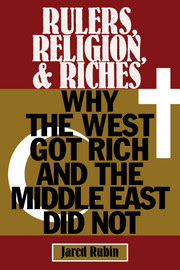
"By getting “religion out of politics”, Europe made space at the political “bargaining table” for economic interests, creating a virtuous cycle of “pro-growth” policy-making. Islamic rulers, by contrast, continued to rely on religious legitimation and economic interests were mostly excluded from politics, leading to governance that focused on the narrow interests of sultans, and the conservative religious and military elites who backed them."
"Beneath the crude statistic that the world is heading towards 70% urbanisation by 2050 lie regional differences in demographic, economic and environmental change. LSE Cities’ Urban Age programme takes a deeper look at the data"
The Guardian shares interactive database -- The Counted -- of everyone killed by police in the US in 2015 (and counting). I've personally witnessed grotesque police brutality and -- like the rest of the 'Net -- have seen the seemingly endless number of videos of bullies with badges brutalizing citizenry. And we're not talking about gangsters or terrorists, but everyday people. Here we can see the ridiculous scale of the wanton moral (and legal) corruption and inhumanity run amok. Who protects us from our so-called protectors?
The Guardianexcerpts Judith Rodin's The Resilience Dividend: Managing Disruption, Avoiding Disaster and Growing Stronger in an Unpredictable World...
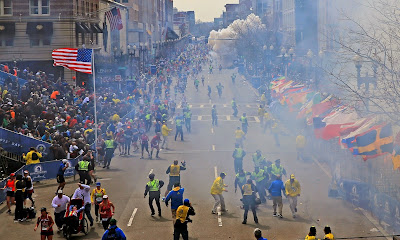
"The city of Boston proved it had developed an exceptional state of readiness for a citywide disruption when, on the afternoon of 15 April, 2013 -- Marathon Monday, as it’s known there -- two improvised explosive devices detonated on Boylston Street. Although the attack was unanticipated and unpredictable, Boston had been getting ready for just such an event for more than a decade -- through network building and streamlining communications to improve awareness, undertaking situational drills and exercises to fine-tune integration, and finding and adapting best practices from colleagues worldwide to bring in a broad range of ideas and solutions. [...] Being prepared is not a matter of luck [...] It was a matter of carefully and methodically building the characteristics of resilience that enable an effective response to crisis. Resilience is not only about responding to shock and stress. It is also about learning and continuing to adapt and grow because of the experience. This process of “revitalisation” can further increase your readiness for subsequent disruptions, find opportunities that emerge from what you have learned, affect positive changes, and build even greater resilience (“the resilience dividend”)."
A Carrington-class CME -- Coronal Mass Ejection or plasma burst -- narrowly missed Earth two years ago reports the Guardian's Maev Kennedy...
"The date of 23 July 2012 could have been the day the lights went out, along with suddenly not-so-smart phones, computers, satellite transmissions, GPS navigation systems, televisions, radio broadcasts, hospital equipment, electric pumps and water supplies. On that day an "extreme solar storm" did its best to end life on Earth as we know it. The sun forced out one of the biggest plasma clouds ever detected at a speed of 3,000km per second, more than four times faster than a typical solar eruption. Fortunately it missed. "If it had hit, we would still be picking up the pieces," said Daniel Baker, of the Laboratory for Atmospheric and Space Physics at the University of Colorado."
Decca Aitkenhead of the Guardian spotlights director Steve McQueen and his new film 12 Years A Slave inspired by the real-life experience of Solomon Northup...
"...a prosperous black New York businessman, drugged by traffickers and sold into slavery, who escaped 12 years later and published a memoir detailing the horror of Louisiana plantation life."
"Sociologist William B Helmreich was born and grew up in New York City. As a boy, he and his father played a game called "Last Stop". It involved riding the subway from the station at 103rd Street near their Upper West Side apartment to the last stop on the line. Then, like intrepid explorers, they would discover the area's secrets on foot. (Helmreich's father died in 2011 at the age of 101.) In a sense, this book is a continuation of that urban game. To write The New York Nobody Knows, Helmreich walked 6,048 miles, covering almost every block in the city's five boroughs: Queens, Manhattan, Staten Island, Brooklyn and the Bronx. It took him four years, walking an average of 1,512 miles a year. He wore out nine pairs of shoes. Helmreich admits that "you have to be a little crazy to explore the city as I did". But big cities do that to you. [...] It's refreshing to read a book that celebrates so unreservedly the ethnic diversity of a city and entirely fitting that it should be about a metropolis that has always been defined by its cosmopolitan culture. For Helmreich, the city's diversity is the well-spring of its success."
"What makes a city a great place to live -- your commute, property prices or good conversation? [...] Is urban design really powerful enough to make or break happiness? The question deserves consideration, because the happy city message is taking root around the world. "The most dynamic economies of the 20th century produced the most miserable cities of all [...] totally dominated by cars." [...] By spending resources and designing cities in a way that values everyone's experience, we can make cities that help us all get stronger, more resilient, more connected, more active and more free. We just have to decide who our cities are for. And we have to believe that they can change. "
"Most of the flying robots carrying out those kill missions are eerie, windowless airborne hulks bristling with Hellfire missiles. Enormous winged battledicks. They're frightening, but visually silly somehow, which adds to the obscenity of it all. The smaller drones [are] potentially more deadly. Compared with the current models flying over Pakistan, they have fearsome advantages of stealth, agility -- and sheer number. Because there were swarms of the things. Some were the size of pigeons. In fact, they actively disguised themselves as pigeons: they landed on overhead phonelines and folded their wings around themselves so the folk down below wouldn't get too suspicious. Then they hovered around gathering surveillance information. At one point the video shows a company of multiple "bugbots", each the size of a Milky Way bar, spreading out to wirelessly compile a good overall view of an apparently hostile city. Then one of them sneaks past a guard, swoops down a corridor, flies through a doorway and shoots a bad guy in the head. [...] See? Precisely the sort of thing that'll definitely kill us all."
The Guardian Observer spots Fritz Vollrath's Oxford Silk Group research on harvesting spider silk by reeling...
"...silk directly from the spider. At the start of this film a spider is pinned down after being sedated with carbon dioxide gas. The silk being pulled from the spinnerets consists mainly of major ampullate silk which forms the main structure of the web (like scaffolding) and minor ampullate silk, which is used to form the main spiral of the spider's web. The silk thread is pulled over on to the spool and attached with a dab of glue, and the motor is then run to start collection on to the spool. The species of this spider is Nephila edulis. It's possible to harvest between 30-80 metres of silk in one go, after which the spider can be released back to its web to feed ready for reeling another day."
"The criminalising of squatters in Britain is part of a Europe-wide backlash. But with at least 10% of the world population squatting, can they really be a menace to society? [...] It is invariably rightwing governments that push through the laws [...] often on the basis of spurious arguments. [...] "it's part of a revanchist mood in politics [...] Everything that people hate is blamed on soft, leftwing politics from the 1960s and 70s -- migration, squatting, Muslims. So it's revenge against what happened in the past." [...] But if squatting is on the retreat in Europe, it has exploded in the rest of the world. According to a recent UN estimate, some 800 to 900 million people around the world are technically squatters -- over 10% of the world's population. The socio-economic conditions are different: these are overwhelmingly rural migrants settling on the outskirts of cities. But these are still people occupying land they do not own, without permission. [...] These squat neighbourhoods are often referred to as slums, shanty towns, favelas or bidonvilles. They are often characterised as grim places, with poor sanitation, high crime rates, drug gangs, and other problems. But it's often a misconception, says Robert Neuwirth, author of Shadow Cities: A Billion Squatters. He spent two years living in slums in four of the world's largest cities: Mumbai, Nairobi, Istanbul and Rio de Janeiro. "They're not criminal enterprises. They're not mafias," he says. "These are people, law-abiding citizens, workers. People who wait on the tables and clean the rooms in the tourist hotels. People help each other and take care of each other."
We urgently need more inclusive and better slum solutions.
"Many of the ideas that most influenced the design of cities were first expressed through diagrams. These simple visual statements have become iconic distillations of values, policy agendas and ideologies -- touchstones in the visual lexicon of urban planning and design. Grand Reductions investigates the visual culture and iconography of city planning and the impact, for better or worse, of these ideas on the shape of communities in the United States."
"To peer inside the moon, scientists used measurements from two NASA satellites called Ebb and Flow, collectively known as the Gravity Recovery and Interior Laboratory (GRAIL) mission. By measuring the tiny fluctuations in the moon's gravitational field, they have indicated that, in its first billion years, the moon (and, by inference, many of the inner planets) was fractured repeatedly by violent impacts from asteroids and other remnants from the early years of the solar system."
"The Chosen Vessel, run by NGO Project Amazonas, provides medical services to the remote villages of the Peruvian Amazon. There is an on-board doctor and dentist, and free reading glasses are given to those who need them. The boat hospital has treated 200,000 people in the 16 years it has been sailing on the river."
Very compelling to see The Guardian's global development spotlight on Ali Idrissa's campaigning with Publish What You Pay in Niger for greater awareness and transparency in resource extraction industries...
"Nigeriens should not need help from rich countries to combat natural disasters and poverty: 'If we benefited from our resources, we would no longer need to do that.' Niger's uranium, gold and oil are not used to help alleviate poverty, he argues. Instead, there is exploitation, including child labour and exposure to cyanide."
"In a rundown building in the mountain village of Sijban, girls sit at their desks, hair loosely covered in white or black scarves, staring raptly at their teacher. They say they want to become either doctors or teachers when they grow up. This is the one government primary school for girls in the Swat valley that was spared destruction by the Taliban. Their headteacher, Gul-e-Khandana, is no ordinary teacher -- she stood up to the Taliban and managed to save the school [...] now the Taliban have left the valley, enrolment is increasing. "More girls are coming back and many want to go on to college. There is a change; parents are willing to encourage their daughters. As for the girls, you can see the happiness on their faces, they are so happy to be back in a proper school again. Many lost almost two years of their studies." The Taliban destroyed more than 400 of the 1,576 schools in Swat. "Seventy percent of them were girls' schools," [...] as the conflict with the government intensified they started destroying both boys' schools as well as girls' schools. It was a terrible time. How can you build a nation without education?" [...] Gul-e-Khandana believes that girls are the future for Pakistan. "Above all, girls must be educated," she says. "When one girl is educated, she educates her entire household. The role of women is very important in our society -- it is they who can change our way of life for the better."
In light of supermoon, it's high time we look more closely at our satellite's cataclysmic past;-) Ian Sample of the Guardiansummarized latest NASA research a few years ago...
"Some regions of the moon are so pocked with craters they have reached what planetary scientists call "saturation equilibrium", where each additional crater wipes out an older one, so the number of craters remains the same. [...] A team led by James Head at Brown University in Providence, Rhode Island, used an instrument called a laser altimeter on the Lunar Reconnaissance Orbiter to map craters on the moon. The instrument bounces laser pulses off the lunar surface every 25 metres as it hurtles overhead. By measuring how long each laser pulse takes to bounce back to the spacecraft, scientists can map the surface contours of the moon to a vertical accuracy of 10cm."
The Economist has just published Megachange: The World in 2050. First, their own internal correspondents and editors discuss such prognostication, asserting It's not all gloom and doom. Next, the BBC's Nick Higham meets the Economist's Executive Editor, Daniel Franklin. Then, here's Franklin's own words...
"In 2050 there will be 9.3 billion people alive -- compared with 7 billion today -- and the number will still be rising. The population aged over sixty-five will have more than doubled, to more than 16 per cent; China's GDP will be 80 per cent more than America's; and the number of cars on India's roads will have increased by 3,880 per cent. And, in 2050 it should be clear whether we are alone in the universe."
Finally, the Guardian's review by Will Self is a scathing knock-down:
"A free-market, Panglossian set of prophecies fails to impress [...] workaday familiarity with the imperfections of futurology that makes [editor] Franklin so keen to distance himself from any great likelihood of being right. [...] instead of a steely-eyed look ahead, Megachange offers us a straightforward survey of the world as it is today, together with a lot of future hedging. Thus the text is bedizened with these qualifiers: "it may well be", "probably", "possibly" and indeed "likely" appear so often that the casual reader might well be lulled into thinking these Economist stalwarts are genuinely sceptical about their claims -- but don't be fooled. Franklin sets out their stall thus: "there is every chance that the world in 2050 will be richer, healthier, more connected, more sustainable, more productive, more innovative, better educated, with less inequality between rich and poor and between men and women, and with more opportunity for billions of people." [...] if you want to know what the world might actually be like in 2050 you'd do better to browse in the science fiction and fantasy section of your local online retailer, which is where Megachange properly belongs."
Nice Future of Food piece by John Vidal in the Guardian/Observer...
"How can we feed the 2.5 billion more people -- an extra China and India -- likely to be alive in 2050? The UN says we will have to nearly double our food production and governments say we should adopt new technologies and avoid waste, but however you cut it, there are already one billion chronically hungry people, there's little more virgin land to open up, climate change will only make farming harder to grow food in most places, the oceans are overfished, and much of the world faces growing water shortages. [...] Food, farm and water technologists will have to find new ways to grow more crops in places that until now were hard or impossible to farm. It may need a total rethink over how we use land and water. So enter a new generation of radical farmers, novel foods and bright ideas."
These include Algae, Artificial Meat, New Crops, Desert Greening, and Insects!
MIT $100K Entrepreneurship Competition, Enterprise Forum Global, Enterprise Forum of Cambridge, Muddy Charles Pub, African Business Club, Sloan Entrepreneurs for International Development, Global Startup Workshop, Sustainability@MIT, TechLink, Making Progress, HighTechFever.tv, MIT Innovation Tours








.svg.png)


